
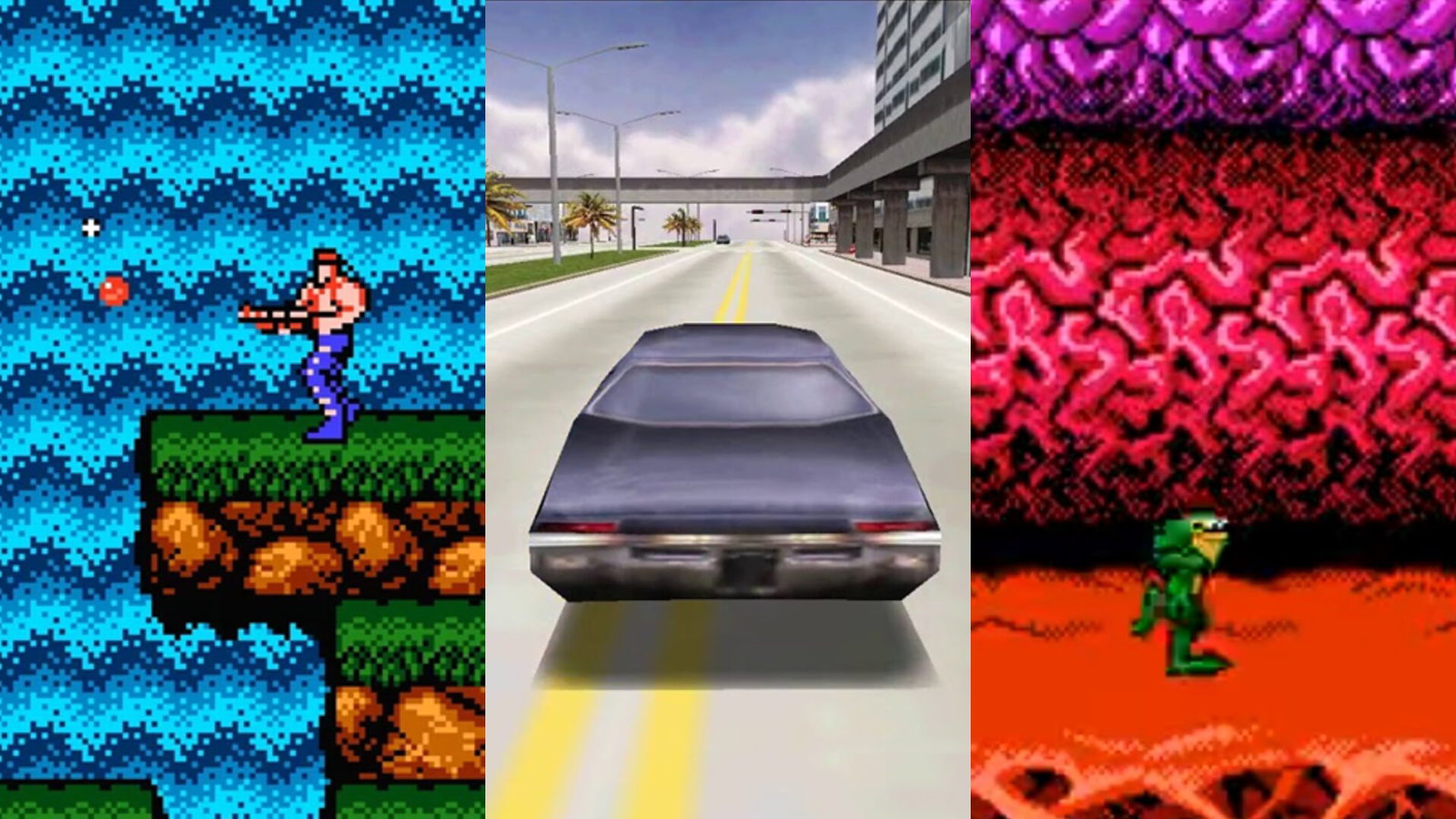
Image via Konami (Left), Reflections Interactive (Middle), and Rare (Right).
Image via Konami (Left), Reflections Interactive (Middle), and Rare (Right).
Back in the '80s and '90s, games didn't believe in tutorials, generous checkpoints, or difficulty levels you could choose from. You either figured things out through endless trial and error or accepted defeat after burning through your last life.
Looking back, many of those seemingly impossible games weren't unfair, but as a kid, those games gave players literal nightmares.
Here are 10 retro games that felt downright impossible growing up but right now feel manageable, ranked from least to most difficult for kids.
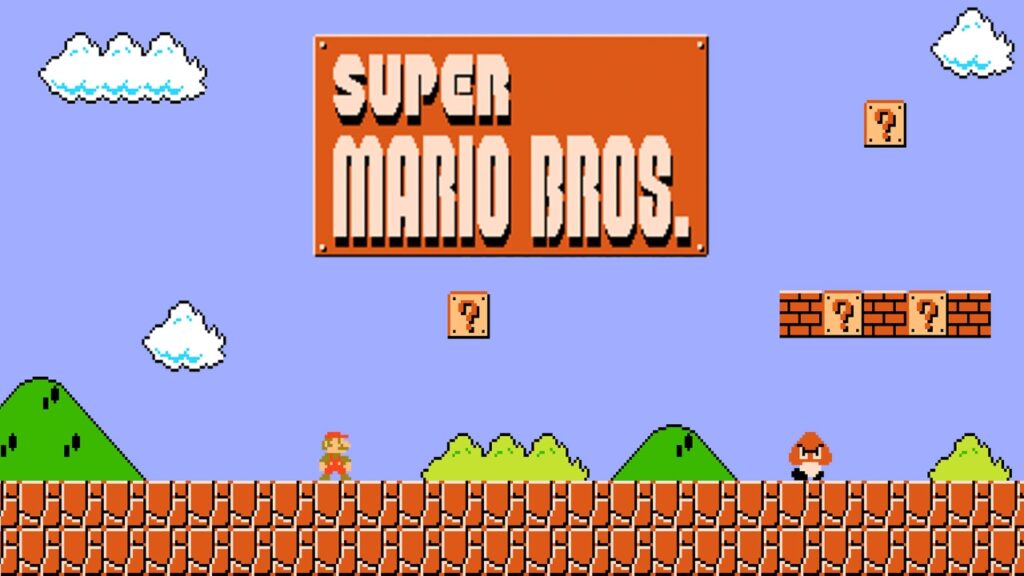
Image via: Nintendo
Image via: Nintendo
10. Teenage Mutant Ninja Turtles (1989)
Only one level that can describe the difficulty of the original 1989 NES Teenage Mutant Ninja Turtles is the underwater bomb defusal stage. From tight timers and electrified seaweed to awkward swimming controls, there are just too many things that need to be controlled.
Plenty of players never made it beyond that point as kids. However, with practice and route knowledge, it's much easier to clear today. For instance, the infamous dam stage remains one of retro gaming's biggest childhood roadblocks.
9. Sonic the Hedgehog
Green Hill Zone gave kids a false sense of confidence. But that's until Sonic the Hedgehog slowed everything down. Marble Zone's lava, Labyrinth Zone's underwater sections, and later platforming made life miserable for the gamer kids.
Younger players often rushed ahead and paid the price. But adults realized that patience matters more than momentum. That's why the game feels dramatically easier on a replay, especially after growing up.
8. Crash Bandicoot
Kids got attracted to the original Crash Bandicoot because it was colorful. But the game was viciously tough to make those same kids cry.
There was no place for any mistimed jump. Levels like The High Road, Slippery Climb, and the famous boulder chase needed a high level of precision that many young players find difficult.
However, when older players returned to the game, they realized it was not raw reflexes they needed to ace the game. It was properly memorizing the obstacle layouts that mattered the most.
7. The Legend of Zelda
In the 1990s, there was no YouTube or walkthroughs. That's why the first The Legend of Zelda could leave players wandering aimlessly for weeks. Without pure luck, progress felt almost impossible, all thanks to hidden dungeon entrances, cryptic NPC hints, and secret walls.
Today, we play the game differently. We pay closer attention to clues and experimenting more deliberately. That's why what once felt confusing in childhood now feels enjoyable.
6. Castlevania
Few games humbled young players like the original Castlevania. It featured stiff jumps, relentless Medusa Heads, and punishing boss fights. That means every mistake was significant.
Frankenstein's Monster became a notorious wall for many kids before they ever reached Dracula.
That's why modern players started relying on better timing and enemy pattern recognition. And they now wonder why those same encounters once seemed completely unbeatable.
5. Mega Man 2
Mega Man 2 was another title that required precision. Every Robot Master introduced a fresh challenge, but things went out of hands when Quick Man's laser corridors and Wily's fortress appeared.
Many children didn't fully understand weapon weaknesses either. Older players understand the ideal stage order and each boss's weakness. That's why the once-exhausting struggles now have turned into a satisfying test.
4. Super Mario Bros.
Super Mario Bros. was an extremely popular title and most kids could breeze through the early worlds.
However, everything changed towards the end of the game. Level 8-2's brutal jumps, the Hammer Bros in 8-3, and the maze-like castle in 8-4 stopped countless playthroughs.
But players now realize all they needed at that time was memorizing the whole map and a confident playthrough afterwards. That's why the game feels much less intimidating now.
3. Contra
Without the famous Konami Code, Contra was a ruthless shooter for younger players. It demanded near-perfect execution, and one hit meant death. Enemy patterns could be tackled through memorizing, but their attacks were rapid.
Children those days often relied on extra lives to survive. But experienced players today can clear the campaign through careful positioning, rhythm, and knowledge accumulated over years.
2. Driver
Many young players never even reached Driver's first real mission. And it's all because the infamous parking garage tutorial stood in the way. Performing slaloms, reverse 180s, burnouts, and handbrake turns within a strict timer frustrated an entire generation.
But adults and seasoned players can manage to understand the controls much faster. That's how they got over with their childhood traumas and were finally able to enjoy the game.
1. Battletoads
Nothing defined childhood gaming frustration quite like Battletoads. From the brutal Turbo Tunnel and unforgiving platforming to relentless enemy waves, every stage seemed designed to end a run instantly.
Even today it's a demanding game. But experienced players recognize patterns far more quickly. That's how they turned this hopeless survival into something achievable.
Read more at Gaming Community by Max Level!
Written by

Nilendu Brahma
Edited by

Arundhoti Palit