
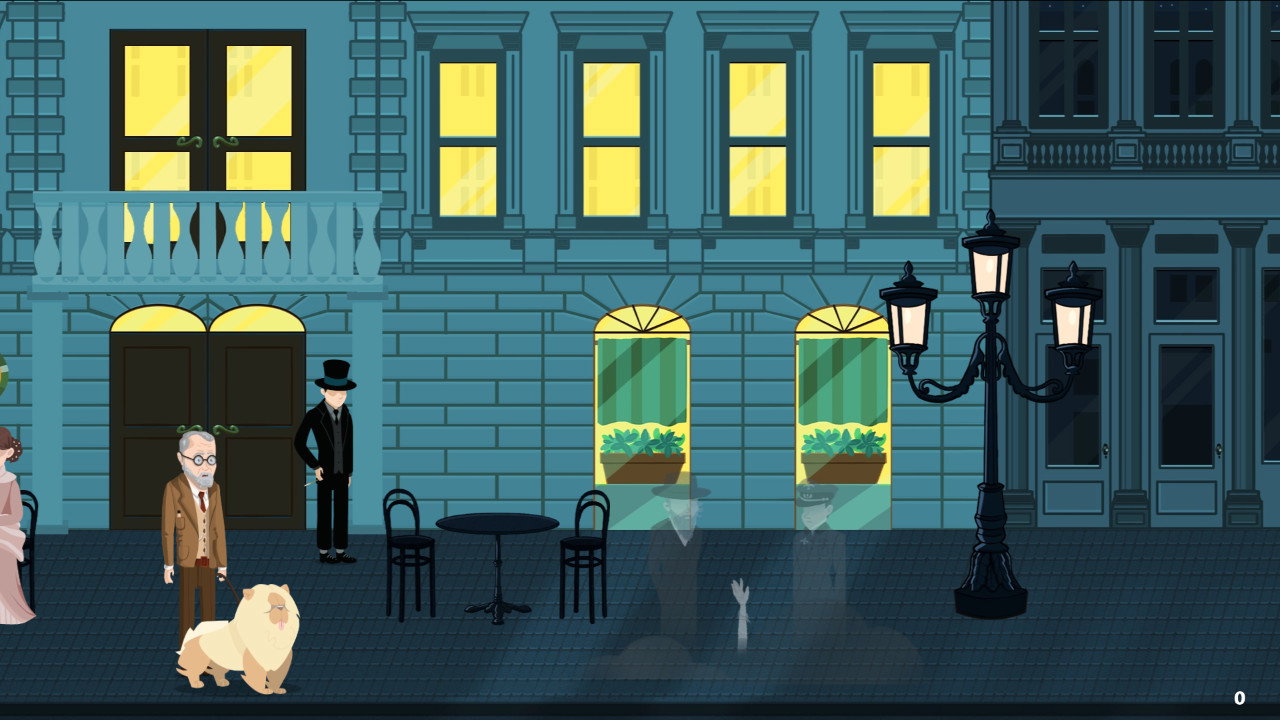
via Imago
Via Steam/Katabasi Studio
Most people link horror games to ghosts and monsters. Sigmund Freud would argue that they are really about one's mind.
His ideas of the unconscious mind and repressed emotions changed how the modern horror genre in video games is presented, focusing more on what people cannot fully see or understand.
May 6, 2026 marks Freud's 170th birthday, and there is no better time to see how his ideas still shape video games of the 21st century.
The Mind is an Iceberg
This quote illustrates Freud’s belief that the human mind represses negative desires within the unconscious.
The human mind is affected more by a triggering memory or incident related to a negative emotion than by a haunting.
Consider the game Silent Hill 2, where monsters represent James Sunderland's hidden desires and guilt. The game shifted horror toward internal conflict and symbolism, contrasting with the exploration-heavy style of Resident Evil.
It also changed how the horror genre was viewed, making fear personal rather than survival-driven.
The Oedipal Complex
Fundamentally, Freud believed that when kids are young, they may feel attached to one parent and not the other, without understanding why. These feelings are not chosen and usually go away as they grow up.
This is explored in Final Fantasy VII, where the villain Sephiroth seeks to erase the world, to reunite with Jenova, a powerful alien entity he believes to be his mother, while attempting to ascend as a god.
The Unconscious Mind
"The psychical, whatever its nature be, is itself unconscious." Your dreams are not random. They act as gateways for your unconscious mind to speak to you.
According to Freud, the brain keeps working in the background, even when you do not notice it. There may be occasions when you feel scared for no reason. This can happen because your mind is holding thoughts and feelings you are unaware of.
Anatomy, P.T., and Neverending Nightmares use repetition of scenarios to create a horror atmosphere, while Alan Wake 2 and Omori explore distorted realities to present this concept.
The Tripartite Theory
Freud divided the human mind into three parts that work together.
- Id (desires - wanting things right away)
- Ego (reality - think and make the smart choice)
- Superego (morality - differentiate between right and wrong)
Games like Xenogears explore the 'Id' part of the theory. The Pyramid Head character from Silent Hill 2 can be considered a mix of Id and Superego. Another game, I Have No Mouth, and I Must Scream, has an AI antagonist whose psychological motivations represent all three components of Freud's theory.
Read more at Gaming Community by Max Level!
Written by

Abhisek Bajaj
Edited by

Pulkit Prabhav