
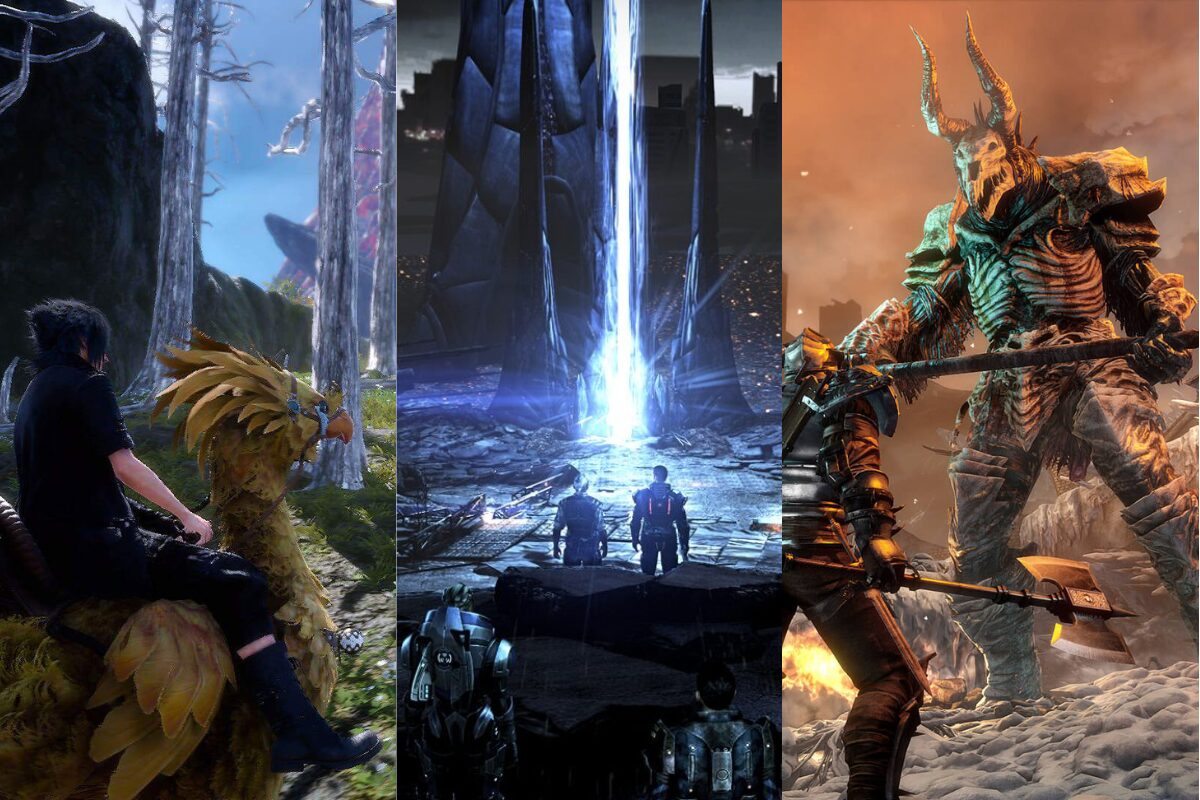
Picture Courtesy - Square Enix, EA, Focus Entertainment
Picture Courtesy - Square Enix, EA, Focus Entertainment
Video games are meant to be an enjoyable experience; an escape from reality. But these 9 titles will leave you with a lot of guilt once you complete them.
The developers attempt to shock and surprise the audience with the ending. And in some cases, they do it by making you confront your morality, conscience, and own guilt.
Let us look at these 9 games that capture that sentiment beautifully.
Red Dead Redemption 2 (2018)

Picture Courtesy - Rockstar Games
Picture Courtesy - Rockstar Games
In Red Dead Redemption 2, you end up living vicariously through Arthur Morgan. You spend hours with the Van der Linde gang and form a brotherhood. Yet, in final leg of the game, there's a sense of dread that overcomes the player.
Arthur's diagnosis is troubling, but the real weight is his journey through regret and revenge; the story pulls you in hard And when it's all said and done, the realization that you will never be able to live through this experience for the first time again hits harder.
There's some redemption for those who got the High Honor ending, as Morgan meets a fitting end.
What Remains of Edith Finch (2017)
What Remains of Edith Finch is perhaps the benchmark for making each chapter of the game feel unique and personal. It helps you realize that life itself is a chapter, and the certainty of every person's mortality.
As you return to Edith Finch's abandoned family home and learn about the lives and passing of each family member, you feel personally related to their stories and their tragedy.
Every room is a chapter or a person you learn about. And there is a guilt to end the entire game, which leaves you to reflect on the fact that it is the people that make memories special.
The Last of Us Part II (2020)
The beauty of The Last of Us Part II was the game's detailed perspective on revenge. In essence, that's what both Ellie's and Abby's stories are.
While Ellie chases the latter after her attack on Joel, Abby begins to find some sense of redemption, walking away from the conflict to start anew. Yet, when the game forces you to battle Abby in the end, players almost wanted to put their controllers down.
And Ellie's thirst for revenge only left her alone.
Disco Elysium (2019)
Unlike other games that make you save the world, you have to save yourself in Disco Elysium, and in more ways than one.
You transform from a washed-up detective into someone your partner Kim respects, but the ending never lets you feel that victory
You also gain a companion during the journey in Kim Kitsuragi, and letting go of the game feels like abandoning a friend. Even in a virtual reality, it hurts.
Life is Strange (2015)
The ending of Life is Strange is a magnified form of the Trolley problem. Max and Chloe have grown together over the years, something that shouldn't have happened.
But you, as Max, made it possible by manipulating time. It came at a cost, though, as now you must choose between saving a personal companion or most of Arcadia Bay.
The morality will eat away at your heart, and no matter what you choose, you will carry the guilt of sacrificing the other(s) after the game ends.
Omori (2020)
Omori is an emotional rollercoaster. In the ending, you are left with the choice to confront the ugly truth of the crime you committed and the lies you said to hide it.
As you defeat Omori and visit Basil in the hospital to tell everyone the truth, the scene cuts right after, leaving you with the guilt of not seeing how they react, whether they somehow knew it before, and what happens next.
There are alternate endings as well, where you can choose to live with the guilt of causing your older sister Mari's death. So basically, Omori is a one-way ticket to guilt-land.
Spec Ops: The Line (2012)
While many generalized it with other shooters that released during the same window, this title shows the ugly side of war and violence.
Towards the end, the game shows that Konrad had been gone for months, and that Martin Walker was hallucinating his presence and his orders; that all those innocent lives lost are now on his and, by extension, your conscience.
In the end, there are multiple choices such as surrendering, or confronting the rest of the squad. Each is filled with guilt.
Since you are Martin Walker, regardless of what you choose, the guilt of causing the loss of innocent civilian lives is something that you will take with you after you are done with the game.
Ori and the Will of the Wisps (2020)
Ori and the Will of the Wisps teaches you an important lesson - the inevitability of the circle of life. In the end, the Spirit Tree reveals itself as Ori.
Before that sequence, you as Ori manage to revive the Spirit Willow. But you end up merging with the Spirit Willow, becoming a Spirit Tree to ensure others can continue living.
The antagonist, Ku, ends up returning to the bodies of her parents and faces death alongside them. The stunning visuals add to the emotional trauma you receive towards the end.
In the end, a leaf falls and starts glowing from Ori, the Spirit Tree and the narrator, revealing that it is time for a new Spirit Guardian, showing the circle of life continues.
Mass Effect 3 (2012)
Mass Effect 3's ending caps the trilogy with memories of your entire journey, forcing a sacrifice that haunts you regardless of choice
The end is all about sacrifice. Once Shepard learns the truth about Catalyst controlling the Reapers, he has to make a hard choice among the ones available.
No matter what you select, Shepard will most likely end up sacrificing himself, and in some of the choices, the Reapers. But the Reapers were mere creatures doing the Catalyst, their creator's bidding.
The game leaves you not just with the guilt of your choice but also the realization that the enemy was also trying to save life in its own way.
Which video game left you with a guilty conscience?
Read more at Gaming Community by Max Level!
Written by

Abhisek Bajaj
Edited by

Siddharth Shirwadkar