
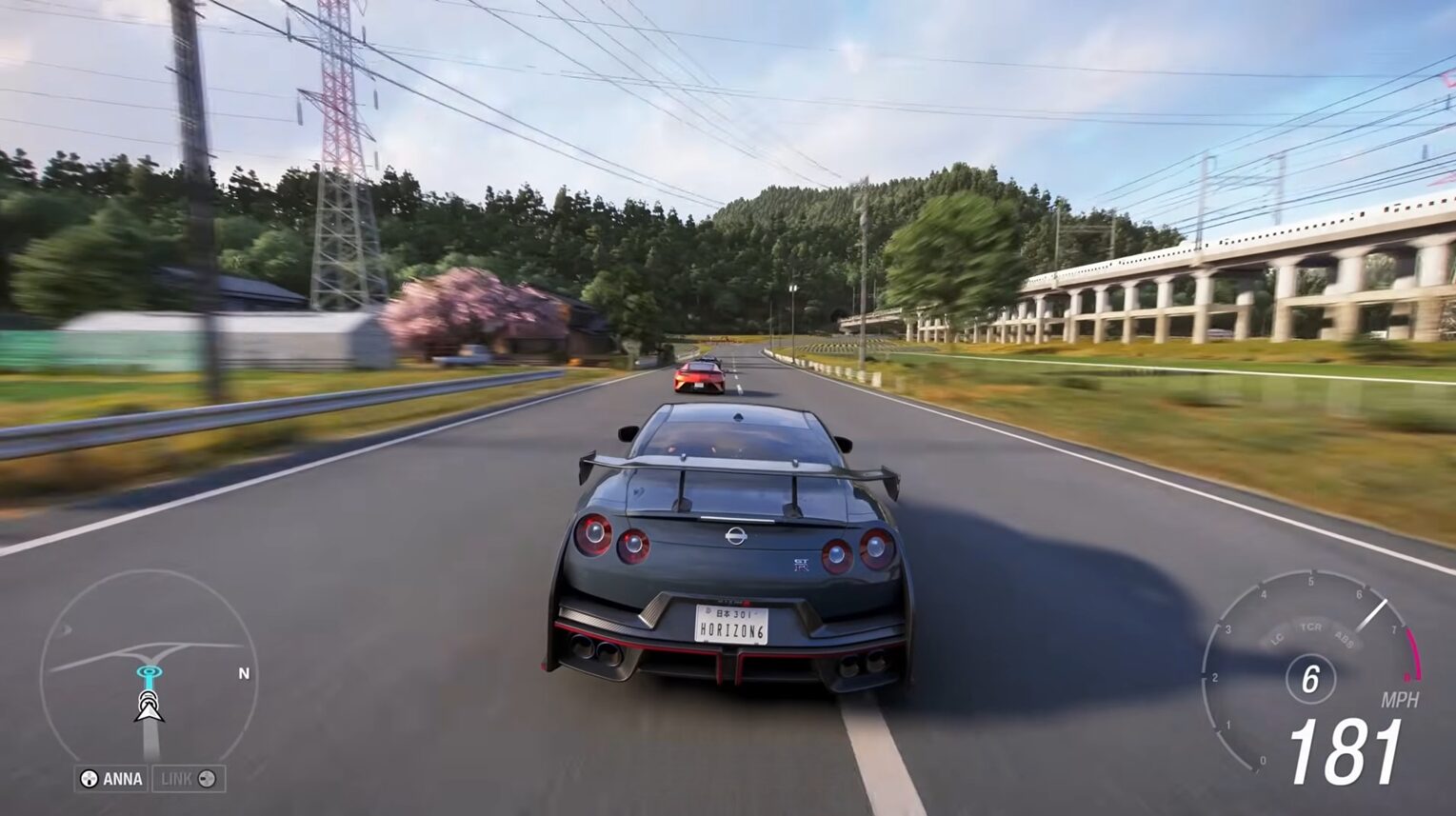
Via: Playground Games.
Via: Playground Games.
Forza Horizon 6 gives players more freedom than the previous entries in terms of tuning. But that also means a bad tune will punish the players harder.
A car that feels unstoppable on long straights can become underpowered in mountain sections if the setup is wrong. That's why you need to understand what each slider actually changes, unless you want to download community tunes and hope for the best.
Before You Touch Any Slider: Follow This Order
Tuning becomes easier when changes happen in sequence.
| Order | Part |
|---|---|
| 1 | Tires |
| 2 | Springs & Ride Height |
| 3 | Camber, Toe & Caster |
| 4 | Anti-Roll Bars |
| 5 | Damping |
| 6 | Brakes |
| 7 | Differential |
| 8 | Aero |
| 9 | Gearing |
Do not tune multiple systems together.
Rule: Change one thing → test → repeat.
Quick Diagnosis Table
| Problem | Most Likely Fix |
|---|---|
| Car refuses to turn | Lower front tire pressure, reduce front ARB |
| Rear slides too much | Lower rear tire pressure, increase rear aero |
| Slow corner exits | Adjust differential acceleration |
| Locks brakes easily | Reduce brake pressure |
| Too much understeer | Reduce front ARB, adjust alignment |
| Bouncy over bumps | Increase damping slightly |
| Hits limiter too early | Lengthen gearing |
| Stable but too slow | Reduce downforce |
Tires Tuning: Your Biggest Performance Upgrade
Tires decide whether the rest of the tune works.
Pressure changes how much of the tire touches the road.
| Higher Pressure | Lower Pressure |
|---|---|
| Faster response | More grip |
| Better straight-line feel | Better cornering |
| Less rolling resistance | More stability |
| Easier to slide | Slower reactions |
Use these starting points
| Setup | Starting Pressure |
|---|---|
| AWD Road | 27–28 PSI |
| Rally Tires | 21–26 PSI |
| Slicks / Semis | Around 32 PSI |
| Heavy Vehicles | 30–32 PSI |
What to adjust
- Car understeers → lower front pressure
- Rear feels unstable → lower rear pressure
- Car feels lazy → increase pressure slightly
- Tires overheating → reduce pressure
Front tire width also matters more in Horizon 6 than in previous games. Wider fronts can fix braking and turn-in without forcing a full compound upgrade.
Springs and Ride Height: Control Weight Transfer
Springs decide how quickly weight moves around the car.
Spring adjustment logic
| Symptom | Change |
|---|---|
| Oversteer on exits | Stiffen front / soften rear |
| Understeer | Soften front / stiffen rear |
| Car bounces | Stiffen overall |
| Car too harsh | Soften overall |
Ride Height Baselines
| Type | Range |
|---|---|
| Race Cars | 4–6 |
| Street Cars | 5–7 |
| Prototypes | 3.5–4.5 |
| Off-road | 5–7 |
Lower setups improve response.
Higher setups can still work in Horizon 6 because mechanical grip matters more than before.
Alignment: Camber, Toe, and Caster Explained
Alignment controls how the tire contacts the road.
Camber
Start around:
- Front: −1.5° to −2.0°
- Rear: −1.0° to −1.5°
Too much negative camber:
- Worse braking
- Worse acceleration
Too little:
- Weak corner grip
Toe
Keep near zero.
Small adjustments only.
- Front toe out → quicker turn-in
- Rear toe in → more stability
Caster
Higher caster:
- Better straight-line stability
- Better cornering support
Recommended:
6.5°–7°
Anti-Roll Bars: Mid-Corner Balance
ARBs change how aggressively the car rotates.
| Adjustment | Result |
|---|---|
| Softer front | More front grip |
| Softer rear | More rear grip |
| Stiffer rear | More rotation |
| Stiffer front | More stability |
General AWD starting point:
- Balanced
- Then reduce front if understeer appears
Do not chase extreme values immediately.
Damping: Stop the Car From Fighting You
Damping controls suspension movement speed.
Two values matter:
Rebound
How quickly suspension extends.
Bump
How quickly suspension compresses.
| Symptom | Adjustment |
|---|---|
| Car keeps bouncing | Increase rebound |
| Too stiff | Lower rebound |
| Jittery | Reduce bump |
| Too soft | Increase bump |
General guideline:
- Rebound higher than bump
- Small adjustments only
Brakes Tuning: More Important Than Previous Games
Brakes now affect stability much more.
Brake Balance
| More Front | More Rear |
|---|---|
| Stable | More rotation |
| Easier control | Risk of instability |
Start:
48–52% front bias
Brake Pressure
| Lower | Higher |
|---|---|
| Easier modulation | More stopping power |
| Less lockup | More aggressive |
If wheels lock:
- Lower pressure
If stopping distance feels long:
- Increase slightly
Differential: Corner Exit Speed Lives Here
Differential tuning changes how power reaches the wheels.
Acceleration
Higher:
- Faster exits
- More aggressive throttle response
Lower:
- Better turn-in
Deceleration
Lower:
- More rotation
Higher:
- More braking stability
AWD Center Balance
| Bias | Result |
|---|---|
| Front | Safer |
| Rear | Faster |
Starting point:
60–80% rear bias
Road racing generally prefers more rear.
Off-road prefers balance.
Aero: Grip vs Top Speed
Aero tuning is simple.
More downforce:
- More grip
- Less speed
Less downforce:
- More speed
- Less corner stability
Starting philosophy
| Front | Rear |
|---|---|
| Higher | Moderate |
If rear feels loose:
- Add rear downforce
If straights feel slow:
- Reduce overall aero
Do not max everything.
Gearing: The Last Step
Never gear before the car handles properly.
Goal:
Barely reach top speed at the end of the longest straight.
| Problem | Fix |
|---|---|
| Hits limiter early | Lengthen |
| Slow exits | Shorten |
| Falls out of power | Shorten |
For most builds:
- Adjust final drive first
- Fine tune gears only afterward
Best Upgrade Priority Before Tuning
- Tires
- Brakes
- Weight Reduction
- Transmission
- Power
Adding horsepower before grip usually creates a harder car to drive.
Final Tuning Checklist
✔ Test stock first
✔ Upgrade tires early
✔ Tune one category at a time
✔ Use small changes
✔ Fix root causes, not symptoms
✔ Prioritize stability over peak speed
✔ Stop tuning once the car becomes predictable
A fast Forza Horizon 6 build is rarely the one with the biggest number. It is usually the one that lets you brake later, rotate cleaner, and accelerate earlier than everyone else.
Read more at Gaming Community by Max Level!
Written by

Nilendu Brahma
Edited by

Pulkit Prabhav